
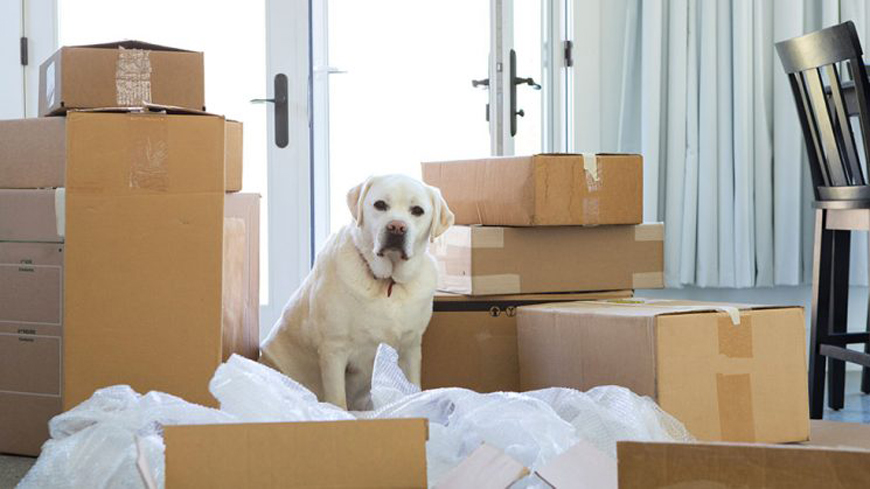
Moving is a big transition—not just for you, but for your pets as well. Animals are creatures of habit, and when their environment suddenly changes, it can lead to confusion, stress, and even anxiety-driven behavior. With the right preparation, though, you can make the experience smoother for everyone involved.
Start with Routine and Familiarity
One of the best ways to reduce stress is to maintain your pet’s normal routine as much as possible. Feeding times, walks, and play sessions should stay consistent, even as boxes pile up around you. Keep a dedicated “pet essentials” bag with food, medications, toys, and familiar items so nothing important gets packed away. These small comforts go a long way in helping pets feel secure during an otherwise chaotic time.
Create a Safe Space on Moving Day
On moving day, the activity alone—movers coming in and out, doors opening, unfamiliar people in the home—can overwhelm pets. Consider setting aside a quiet room where your pet can stay with their favorite items while the move is underway. Some families even opt for pet day care to keep animals completely removed from the disruption. Either way, limiting exposure to the commotion helps prevent stress and accidental escapes.
Plan Ahead for Transportation
Pets should never be transported in a moving truck. Instead, plan to travel with them in your own vehicle or make separate arrangements that prioritize their safety and comfort. Crates or carriers are recommended, especially during long drives, and pets should always wear proper identification. Even well-trained animals can become disoriented in unfamiliar surroundings.
Understand State and International Requirements
If your move crosses state lines—or international borders—there’s an added layer of preparation. Most states require health certificates and up-to-date vaccinations, particularly rabies documentation for dogs and sometimes cats. International moves can be even more complex, often involving permits, quarantine rules, and specific airline regulations. Researching these requirements early—and consulting with your veterinarian—can help you avoid last-minute surprises.
Help Your Pet Adjust to the New Home
Once you arrive, remember that the adjustment period doesn’t end. Your pet is entering a completely new environment with unfamiliar sights, smells, and sounds. Start by introducing them gradually to the new space while keeping familiar items like bedding and toys nearby. It’s also a good idea to keep pets indoors initially until they understand this is their new home. Over time, exploring the neighborhood and establishing new routines can turn the experience into a positive adventure.
A Smoother Move for Every Member of the Family
A successful move means taking care of every member of your household, including the four-legged ones. With a little planning and attention to detail, you can ensure your pets stay safe, comfortable, and happy throughout the entire moving process.